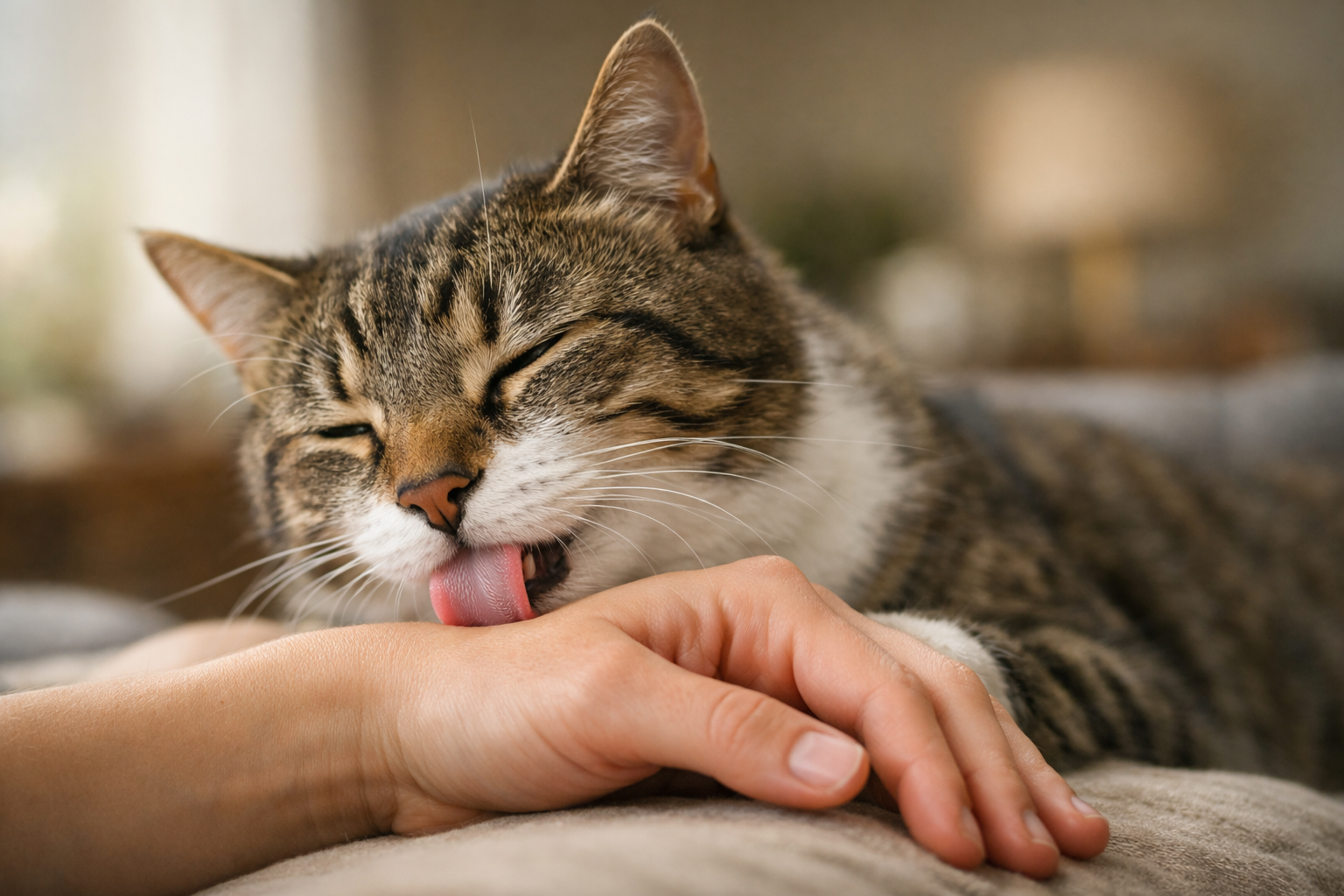
If you’ve ever wondered “why does my cat lick me?”, you’re not alone. This is one of the most common — and most misunderstood — cat behaviors. Some owners find it adorable. Others find it confusing, ticklish, or even a little gross. But here’s the truth: when a cat licks you, it’s almost never random.
Cat licking is a deeply rooted behavior connected to instinct, emotion, social bonding, grooming rituals, stress regulation, and even health signals. Understanding why your cat licks you can tell you a lot about how they feel, how they see you, and whether there’s anything you should (or shouldn’t) do about it.
This guide goes far beyond surface-level explanations. You’ll learn:
- All scientifically and behaviorally proven reasons cats lick humans
- How to tell affectionate licking vs problematic licking
- Whether cat licking is safe for humans
- When licking signals stress, anxiety, or health issues
- How to gently stop licking if it becomes excessive
By the end, you’ll understand your cat better — and strengthen your bond instead of accidentally damaging it.
1. Why Does My Cat Lick Me? (Short Answer)
Your cat licks you because they see you as part of their social group.
In cat language, licking can mean:
- Affection and bonding
- Social grooming
- Comfort and trust
- Stress relief
- Marking you with their scent
- Habit learned in kittenhood
Sometimes, it can also mean overstimulation, anxiety, or redirected behavior — which is why context matters.
2. Is It Normal for Cats to Lick Humans?
Yes — licking is completely normal feline behavior.
In the wild and in multi-cat households, cats groom:
- Their mothers
- Their siblings
- Their bonded companions
When your cat licks you, they’re treating you the same way they’d treat another trusted cat.
However, frequency, intensity, and timing determine whether it’s healthy or a sign of something more.
3. The 10 Main Reasons Cats Lick People
1. Affection and Bonding
This is the most common reason.
Cats groom those they trust. Licking releases endorphins and creates a calming effect, both for the cat and the recipient.
Signs it’s affectionate:
- Slow blinking
- Purring
- Relaxed posture
- Kneading
👉 Translation: “You’re my safe person.”
2. Social Grooming (Allogrooming)
In feline social structures, grooming reinforces hierarchy and bonding.
If your cat licks:
- Your hands
- Your face
- Your hair
They may be “grooming” you the way a dominant or bonded cat would groom another.
3. You Taste Interesting
Cats are extremely sensitive to taste and smell.
Your skin may contain:
- Salt (sweat)
- Lotion residue
- Food smells
- Natural oils
This doesn’t mean your cat is “using” you — it just triggers their grooming instinct.
4. Comfort and Stress Relief
Licking is self-soothing.
Cats may lick you more when:
- They’re anxious
- There’s a change in routine
- They feel insecure
Your presence + licking = emotional regulation.
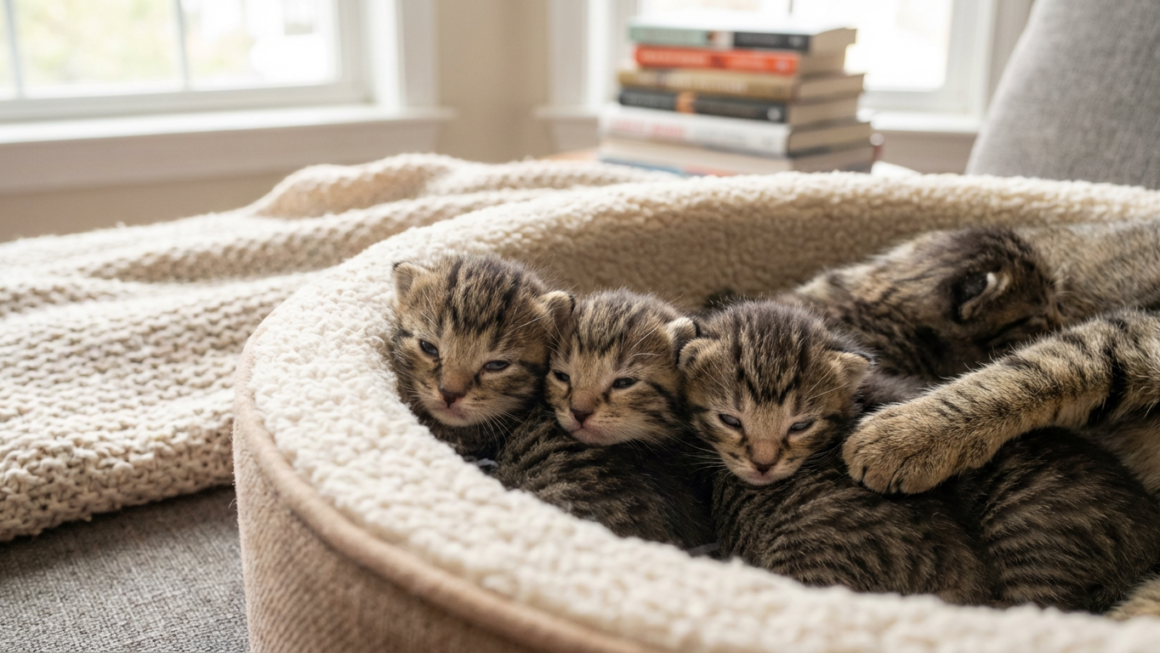
5. Habit Learned as a Kitten
Kittens are groomed constantly by their mothers.
If your cat:
- Was weaned early
- Was bottle-fed
- Had strong maternal bonding
They may transfer that licking behavior onto you.
6. Marking You as “Theirs”
Cats have scent glands in their mouth and tongue.
Licking:
- Transfers scent
- Reinforces territory
- Signals ownership (in a social sense)
This is not dominance — it’s bonding.
7. Overstimulation
Sometimes licking means:
“I’m enjoying this… but I’m getting overwhelmed.”
This often leads to lick → bite behavior, which we’ll cover later.
8. Attention-Seeking Behavior
If licking gets:
- A reaction
- Eye contact
- Talking
Your cat may repeat it because it works.
9. Redirected Grooming Instinct
If your cat wants to groom but can’t reach another cat or object, you become the substitute.
10. Medical or Behavioral Issues (Rare)
Excessive licking can signal:
- Anxiety disorders
- Compulsive behavior
- Skin irritation
- Neurological issues
This is rare, but important to recognize.
4. Cat Licking vs Cat Biting: What’s the Difference?
| Behavior | Meaning |
|---|---|
| Gentle licking | Affection / grooming |
| Fast, repetitive licking | Stress or overstimulation |
| Lick then bite | Overload or boundary setting |
| Hard biting | “Stop now” signal |
5. Does Cat Licking Mean Love or Ownership?
Love — not ownership.
Cats don’t “own” humans the way dogs might protect territory.
Licking means:
- Emotional bonding
- Inclusion in their social circle
- Trust
If your cat licks you and:
- Sleeps near you
- Follows you around
- Seeks contact
You’re emotionally significant to them.
6. Why Does My Cat Lick Me and Then Bite Me?
This is extremely common.
Why it happens:
- Overstimulation
- Too much sensory input
- Sudden mood shift
Cats have lower tolerance thresholds than humans.
How to recognize warning signs:
- Tail flicking
- Ears rotating sideways
- Tense muscles
- Pupils dilating
👉 The bite isn’t aggression — it’s communication.
7. Is It Safe When My Cat Licks Me?
Generally, yes — with precautions.
Safe if:
- You’re healthy
- No open wounds
- Cat is vaccinated
Be cautious if:
- You’re immunocompromised
- Pregnant
- Have broken skin
Wash skin if licking is frequent.
8. Why Do Cats Lick Certain Body Parts?
- Hands: scent + salt
- Face: bonding and recognition
- Hair: grooming instinct
- Feet: strong scent, sweat
Each area triggers different sensory responses.
9. Excessive Licking: When to Be Concerned
Red flags:
- Compulsive licking
- Sudden increase
- Licking objects obsessively
- Hair loss or skin irritation
Possible causes:
- Anxiety
- Environmental stress
- Pain
- Neurological issues
Consult a vet if behavior changes suddenly.
10. How to Stop Your Cat From Licking You (Gently)
Never punish.
Instead:
- Redirect with toys
- Stop interaction calmly
- Avoid strong reactions
- Reward calm behavior
Consistency is key.
11. Kitten vs Adult Cat Licking Behavior
- Kittens: learning social behavior
- Adults: emotional regulation and bonding
Adult licking is more intentional.
12. Breed and Personality Differences
More likely to lick:
- Siamese
- Ragdoll
- Burmese
- Maine Coon
Less likely:
- Independent breeds
- Semi-feral rescues
Personality matters more than breed.
13. What Veterinarians and Behaviorists Say
Consensus:
“Licking is a normal social behavior unless it becomes excessive or compulsive.”
14. FAQ: Quick Answers
Why does my cat lick me so much at night?
Comfort, bonding, and routine.
Is licking a sign of anxiety?
Only if excessive or new.
Should I let my cat lick my face?
Occasionally, yes — but avoid mouth and eyes.
Does licking replace grooming themselves?
No — it complements it.
15. What Your Cat Is Really Saying
When your cat licks you, they’re saying:
“You’re safe. You’re family. You matter to me.”
Understanding this behavior helps you:
- Respect boundaries
- Strengthen trust
- Spot problems early
If you found this guide helpful, share it with another cat lover — and take a moment today to appreciate the quiet ways your cat shows love.