As a cat owner, you’ve likely wondered, “Can cats get cold?” The short answer is yes—cats can indeed feel the chill of low temperatures, just like humans. While their fur provides some insulation, domestic cats aren’t built for extreme cold, and prolonged exposure can lead to discomfort or even serious health risks like hypothermia. In this in-depth guide, we’ll explore everything you need to know about cats and cold weather, including signs to watch for, prevention tips, and how to create a cozy environment for your pet. We’ll also address the common mix-up with “cat colds” (upper respiratory infections), as the query often overlaps with questions about feline illnesses. Whether you’re dealing with winter chills or a sneezy kitty, this article covers it all to help you provide the best care.
By understanding your cat’s needs in cold conditions, you can prevent issues and ensure they stay happy and healthy year-round. Let’s dive in.
Do Cats Get Cold? Understanding Feline Temperature Sensitivity
Yes, cats can get cold, even with their natural fur coats. Domestic cats descend from desert-dwelling ancestors, so they thrive in warmer environments—ideally between 86°F and 97°F for their body temperature. When temperatures drop below 70°F indoors or 45°F outdoors, many cats start feeling uncomfortable. This isn’t just a preference; cold can stress their bodies, leading to behavioral changes or health issues.
Unlike wild cats adapted to harsh climates, most house cats lack the thick undercoats or fat reserves needed for prolonged cold exposure. Factors like humidity, wind, and wetness amplify the chill—wet fur loses insulating properties quickly, making rainy or snowy days particularly risky. Recognizing this sensitivity is key to preventing problems, especially in regions with harsh winters like North Carolina.
What Temperature Is Too Cold for Cats?
There’s no one-size-fits-all answer, but general guidelines help:
- Above 70°F: Optimal for most indoor cats; they feel comfortable without extra warmth.
- 60–70°F: Mild discomfort possible; cats may seek sunny spots or blankets.
- 45–60°F: Uncomfortable for extended periods; vulnerable cats (kittens, seniors) may shiver.
- Below 45°F: Risky outdoors; hypothermia can set in after hours of exposure.
- Below 32°F: Dangerous for all cats; frostbite and severe hypothermia are threats.
These thresholds come from veterinary experts, noting that wind chill and moisture can make it feel colder. For example, a 40°F day with wind feels like 30°F to a cat. Always err on caution—bring outdoor cats inside when temperatures dip.
| Temperature Range | Risk Level | Recommendations |
|---|---|---|
| 70°F+ | Low | Normal activity; monitor for overheating in summer. |
| 50–70°F | Moderate | Provide warm beds; watch seniors and short-haired breeds. |
| 32–50°F | High | Limit outdoor time; use heated shelters for ferals. |
| Below 32°F | Extreme | Keep indoors; emergency vet if exposed. |
Signs Your Cat Is Feeling Cold
Cats are masters at hiding discomfort, but subtle cues reveal when they’re cold:
- Shivering or Trembling: Like humans, this is the body’s way to generate heat.
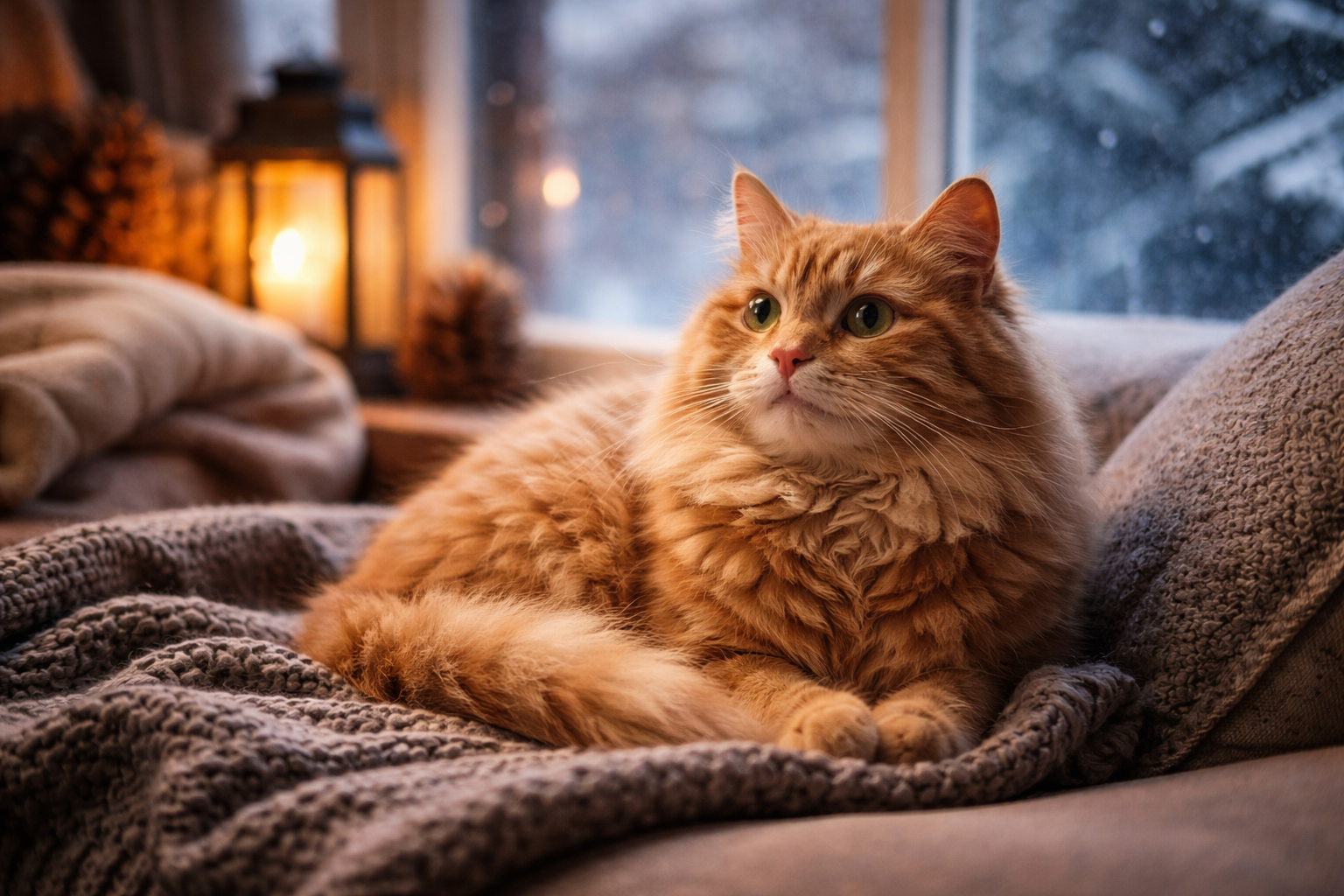
- Seeking Warmth: Curling up tightly, burrowing under blankets, or sitting on heat vents.
- Cold Body Parts: Ears, paws, nose, or tail feel chilly to the touch.
- Behavioral Changes: Lethargy, reduced appetite, or increased vocalization.
- Hunched Posture: Tucked limbs and rounded back to conserve heat.
- Piloerection: Fur standing up (puffing) to trap air for insulation.
If you notice multiple signs, warm your cat gradually—avoid direct heat sources to prevent burns. Persistent symptoms warrant a vet check, as they could mimic other issues like illness.
Factors That Affect a Cat’s Cold Tolerance
Not all cats handle cold the same. Here’s what influences their resilience:
Breed Differences
- Cold-Tolerant Breeds: Siberian, Norwegian Forest Cat, and Maine Coon have dense, water-resistant coats ideal for chilly climates.
- Cold-Sensitive Breeds: Sphynx (hairless), Devon Rex, and short-haired like Siamese feel cold quicker due to minimal fur.
- Medium Tolerance: Persians or British Shorthairs fare better than hairless but worse than long-haired breeds.
A comparison table:
| Breed | Coat Type | Cold Tolerance | Special Needs |
|---|---|---|---|
| Siberian | Long, triple-layered | High | Minimal; natural insulation. |
| Sphynx | Hairless | Low | Sweaters, heated beds essential. |
| Siamese | Short, fine | Medium-Low | Indoor-only in winter. |
| Maine Coon | Long, shaggy | High | Grooming to prevent matting. |
Age and Health Considerations
Kittens under 6 months and seniors over 10 years have weaker thermoregulation. Chronic conditions like arthritis, diabetes, or kidney disease reduce cold tolerance—cold exacerbates joint pain or slows circulation. Thin or underweight cats lack fat insulation, while obese ones may struggle with mobility in cold.
Indoor vs. Outdoor Cats
Indoor cats acclimate to stable temps around 70°F, making even mild cold shocking. Outdoor or feral cats build tolerance but still need shelters—community cats face higher risks in winter.
How to Keep Your Cat Warm in Winter
Prevention is better than cure. Here’s how to create a warm haven:
Indoor Heating Solutions
Maintain home temps at 68–75°F. Use space heaters safely (cat-proof cords), or install heated window perches. Humidifiers combat dry air, preventing skin issues.
Cozy Bedding and Shelters
- Self-warming beds reflect body heat.
- Igloo-style enclosures or cardboard boxes lined with straw for ferals.
- Elevated spots away from drafts.
For outdoor cats, DIY shelters: Insulated bins with straw (not hay—straw repels moisture).
Clothing and Accessories for Cats
Sweaters or booties for short-haired breeds. Start slow to avoid stress—positive reinforcement helps.
Diet and Hydration Tips for Cold Weather
Increase calories slightly (10–20%) for energy; wet food hydrates better in dry winter air. Heated water bowls prevent freezing.
Hypothermia in Cats: Recognition and Emergency Response
Hypothermia occurs when body temp drops below 99°F. Signs: severe shivering, confusion, slow breathing, pale gums. Warm slowly with blankets and body contact; seek vet immediately for IV fluids or warming pads. Prevention: Never leave cats in cars or unheated garages.
The Other Side: Can Cats Catch Colds (The Illness)?
While “can cats get cold” often means temperature, it sometimes refers to illnesses. Yes, cats can get “colds”—actually upper respiratory infections (URIs)—but not the human kind.
Symptoms of Cat Colds
- Sneezing and coughing.
- Runny nose/eyes (clear or colored discharge).
- Fever, lethargy, loss of appetite.
- Congestion leading to mouth breathing.
Severe cases include ulcers or pneumonia.
Causes of Feline Upper Respiratory Infections
90% viral: Feline herpesvirus (FHV) or calicivirus (FCV). Bacteria like Bordetella or Chlamydia secondary. Spread via contact, stress weakens immunity.
Can Cats Catch Colds from Humans?
No—human colds (rhinoviruses) don’t affect cats. Reverse is true; URIs are cat-specific. However, humans can carry feline viruses on clothes.
Treating and Preventing Cat Colds
Home Remedies for Mild Cases
- Steam therapy: Bathroom shower sessions for congestion.
- Humidifiers and saline eye wipes.
- Warm, appetizing food; encourage hydration.
- Isolation to prevent spread.
Avoid human meds—toxic!
| Remedy | How It Helps | Precautions |
|---|---|---|
| Steam | Loosens mucus | 10–15 min sessions; no essential oils. |
| Humidifier | Moistens air | Clean regularly to avoid mold. |
| Saline Wipes | Clears discharge | Use vet-approved; gentle touch. |
| Warm Food | Boosts appetite | Microwave briefly; test temp. |
When to See a Vet
If symptoms last >7 days, or include high fever/dehydration. Antibiotics for bacterial infections; antivirals rare.
Vaccination and Prevention Strategies
Core vaccines cover FHV/FCV. Reduce stress, vaccinate before boarding. Indoor living minimizes exposure.
Common Myths About Cats and Cold
- Myth: Cats’ fur makes them immune to cold. Truth: Fur helps, but not enough below 45°F.
- Myth: Cats can catch human colds. Truth: No, viruses are species-specific.
- Myth: Outdoor cats always adapt. Truth: Many suffer; provide shelters.
- Myth: Heating pads are always safe. Truth: Supervise to prevent burns.
- Myth: Colds in cats are harmless. Truth: Can lead to chronic issues like herpes flare-ups.
FAQ: Your Top Questions Answered
How can I tell if my cat is too cold at night? Look for shivering or curling tightly. Provide extra blankets.
What should I do if my cat has a cold and won’t eat? Warm food and consult a vet for appetite stimulants.
Can indoor cats get cold in a heated home? Yes, if below 70°F; drafts or AC can chill them.
How cold is too cold for kittens? Anything below 60°F; they need warmer environments.
Do cats get seasonal colds more in winter? URIs spike in cold weather due to indoor crowding.
Can voice assistants help with cat cold care? Ask, “How to treat a cat cold at home?” for quick tips.
What breeds handle cold best? Long-haired like Siberians; hairless need extra care.
Is it safe to let cats outside in winter? Only briefly above 45°F; supervise.
Final Thoughts
In summary, cats can get cold—both from low temperatures and as respiratory illnesses—but with proactive care, you can keep them safe. Monitor for signs, provide warmth, vaccinate, and consult vets as needed. Your vigilance ensures a cozy, healthy life for your feline companion. If you’re worried about your cat, schedule a vet visit today—better safe than sorry. For more pet health tips, subscribe to our blog!