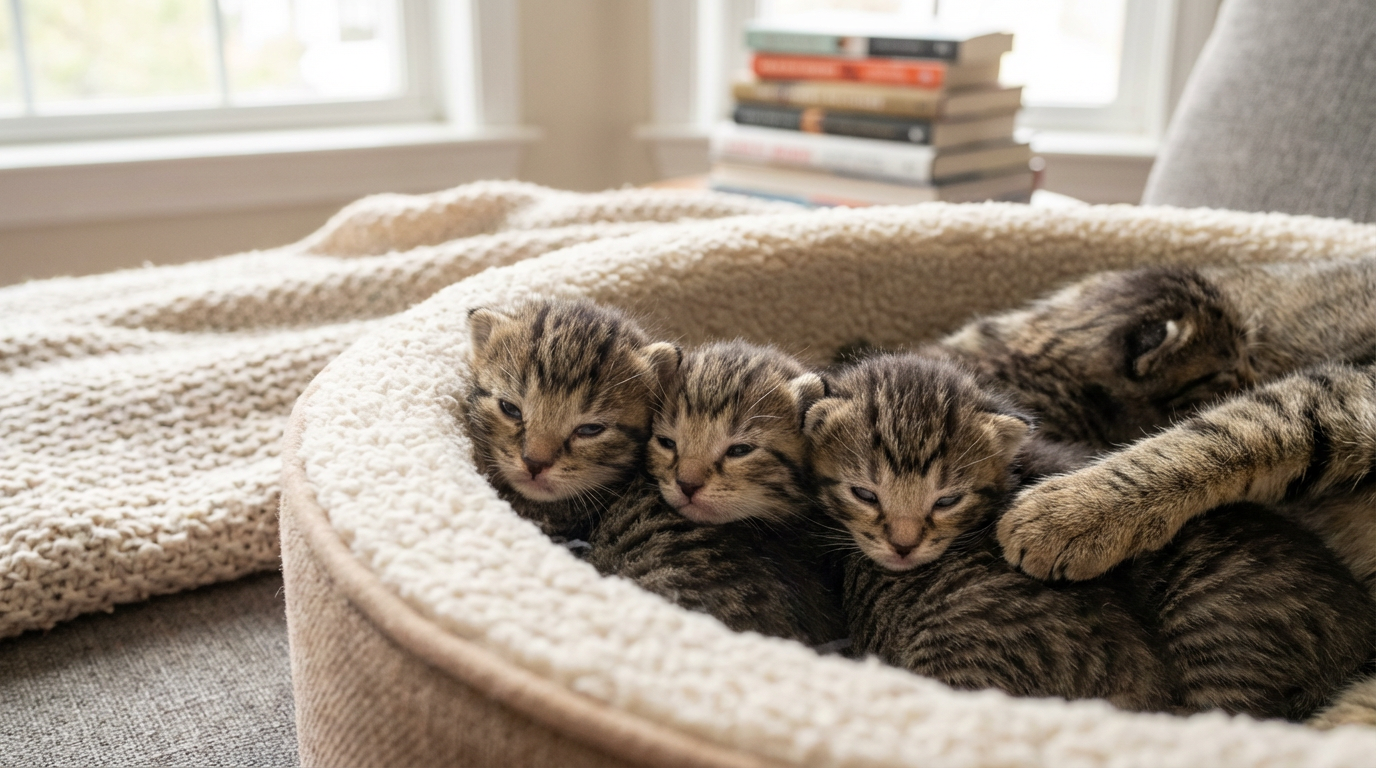
If you’ve ever watched a litter of newborn kittens, you’ve likely asked yourself: when do cats open their eyes? It’s one of the most common and important questions new kitten caregivers, foster pet parents, and curious cat lovers search for — and for good reason. A kitten’s eye development is one of the most critical stages of its early life, directly tied to its neurological health, sensory development, and overall survival.
Kittens are born completely helpless. Their eyes are sealed shut, their ears are folded down, and they rely entirely on their mother for warmth, nutrition, and protection. Understanding when and how their eyes open — and knowing what healthy development looks like — can literally save a kitten’s life if something goes wrong.
In this comprehensive guide, you’ll learn exactly when kittens open their eyes, what the process looks like, what healthy versus abnormal eye development means, and how to care for their delicate eyes during the first critical weeks of life.
When Do Kittens First Open Their Eyes?
The short answer: most kittens begin opening their eyes between 7 and 14 days after birth.
However, the full process isn’t instantaneous. Eye opening in kittens is gradual — it typically starts as a narrow slit and progresses to a fully open eye over the course of several days. Here’s a more precise breakdown:
- Day 7–10: The first signs of eye opening appear, usually starting at the inner corner of the eye
- Day 10–14: Eyes are partially open in most kittens
- Day 14–21: Eyes are fully open in the majority of healthy kittens
- Day 21+: Vision begins to sharpen significantly
It’s important to note that all kittens in the same litter may not open their eyes at exactly the same time. Variation of a few days between littermates is completely normal. Some kittens open their eyes as early as day 5 or 6, while others — particularly those born prematurely or from larger litters — may take up to three weeks.
The key takeaway: if a kitten has not opened its eyes by 21 days of age, this warrants a visit to a veterinarian, as it may indicate infection, developmental issues, or other medical concerns.
Why Are Kittens Born with Closed Eyes?
This is one of those questions that sounds simple but reveals a fascinating piece of biology. Kittens are what scientists call altricial animals — meaning they are born in an underdeveloped state and require significant parental care to survive.
Unlike precocial animals (such as horses or deer, which can stand and run within hours of birth), kittens are born after a relatively short gestation period of approximately 63–65 days. Their nervous systems, sensory organs, and musculature are still developing at the time of birth.
The eyes remain closed because:
- The retina is still developing. The photoreceptor cells — rods and cones — are not yet mature enough to process light at birth. Exposing an underdeveloped retina to full light stimulation too early could cause damage.
- The optic nerve is immature. The neural pathways connecting the eyes to the brain’s visual cortex are still forming in the first week or two of life.
- Protective function. The closed eyelids provide a physical barrier against bacteria, debris, and physical trauma during the most vulnerable period of development.
- Evolutionary design. Since the mother provides all necessary warmth, food, and protection in the early weeks, a kitten does not need vision to survive during this period. Energy can be directed toward other critical developmental processes.
This is the same reason kittens are also born deaf — their ear canals are sealed shut and don’t open until around 10–14 days of age, roughly in parallel with eye opening.
The Stage-by-Stage Development Timeline
Understanding the full kitten development timeline helps you see eye opening in its proper context. Here is a detailed week-by-week breakdown:
Week 1 (Days 1–7)
- Eyes: Completely sealed shut
- Ears: Folded and sealed
- Movement: Crawling only, unable to walk
- Senses: Touch and smell are functional; can locate mother by smell and warmth
- Feeding: Every 1–2 hours on mother’s milk (or bottle if orphaned)
- Weight: Should double birth weight by end of week
Week 2 (Days 7–14)
- Eyes: Begin to open, starting at the inner corner; a blue-gray haze is visible
- Ears: Begin to open; kittens start responding to sounds
- Movement: Wobbly but beginning to support weight
- Senses: Rudimentary vision begins; hearing starts
- Social: Begins to recognize littermates and mother
Week 3 (Days 14–21)
- Eyes: Fully open; vision is blurry but functional
- Ears: Fully erect and functional
- Movement: Walking begins, though unsteady
- Socialization: Play behavior begins; interacts with environment
- Teeth: Baby teeth begin to emerge
Week 4–6 (Days 21–42)
- Eyes: Vision sharpens considerably; depth perception begins developing
- Movement: Running, jumping, and climbing attempts
- Feeding: Weaning begins around week 4
- Social: Critical socialization window opens — human contact is essential during this period
Week 7–12 (Days 42–84)
- Eyes: Vision approaches adult-level clarity
- Final eye color begins to stabilize (though full color change can take up to 6 months)
- Motor skills: Fully developed
- Independence: Ready for adoption at week 8–10
What Do Kittens See When They First Open Their Eyes?
When kittens first crack open those tiny lids, the world they perceive looks nothing like what adult cats — or humans — see. Here’s what science tells us about early kitten vision:
Blurry and out of focus. In the first days after opening, a kitten’s vision is extremely poor. The lens of the eye has not yet achieved the ability to adjust focus properly, meaning everything appears as indistinct shapes and movement.
Highly sensitive to light. Newborn kitten eyes are sensitive to bright light, which is why they’re best observed in dim environments. Bright light can cause discomfort and squinting in newly opened eyes.
Limited color perception. Cats are not colorblind, but they do have fewer cone photoreceptors than humans. In the first weeks of life, color differentiation is minimal. Kittens respond primarily to contrast and movement during this early period.
Motion detection is primary. The visual system prioritizes detecting motion long before it achieves clarity or color resolution. This is why young kittens will track a moving finger or toy before they can clearly distinguish stationary objects.
Depth perception develops gradually. Binocular vision — the ability to perceive depth — requires coordination between both eyes and the brain. This develops progressively over weeks 3 through 8.
By around 10–12 weeks, kitten vision is well-developed and approaching the acuity seen in adult cats, though some refinements continue beyond that point.
Eye Color in Newborn Kittens
One of the most commonly misunderstood facts about kitten eyes: all kittens are born with blue eyes.
Well, technically, their eyes appear blue — but it’s not the same “blue” as a true blue-eyed adult cat like a Siamese. Here’s the science:
When kittens first open their eyes, the iris contains very little melanin (pigment). The appearance of blue is caused by the scattering of light through the iris tissue — a phenomenon known as Rayleigh scattering, the same principle that makes the sky look blue.
As the kitten grows, melanocytes (pigment-producing cells) in the iris become active and begin depositing melanin. This process begins around 6–7 weeks of age and continues until the kitten is approximately 3–6 months old, at which point their permanent eye color is established.
| Eye Color at Birth | Final Eye Color (Adult) |
|---|---|
| Blue-gray | Green, gold, copper, hazel, or amber |
| Blue-gray | Blue (if melanin production remains low — e.g., Siamese, Ragdoll) |
| Blue-gray | Odd-eyed (one blue, one other color) — common in white cats |
Heterochromia (two different-colored eyes) occurs in some cats, most commonly white cats, and is linked to a gene that affects pigment distribution. It is generally not harmful to vision.
If a kitten’s eye color hasn’t changed by 12 weeks, it is likely their permanent color.
Factors That Affect When Kittens Open Their Eyes
Not all kittens follow the exact same timeline. Several biological and environmental factors influence when eye opening occurs:
1. Breed
Different cat breeds have slightly different developmental timelines. Siamese and Oriental breeds, for example, are known to open their eyes somewhat earlier than average — sometimes as early as day 5 or 6. Persian cats, conversely, may open their eyes a little later due to their distinct facial structure.
2. Litter Size
Kittens from larger litters may open their eyes slightly later than those from smaller litters. This is thought to relate to nutrient availability and the mother’s milk supply being distributed among more offspring.
3. Premature Birth
Premature kittens — those born before the full 63–65 day gestation — will naturally take longer to reach developmental milestones, including eye opening. These kittens require especially attentive care and veterinary monitoring.
4. Nutrition and Health of the Mother
A mother cat (queen) who is malnourished or suffering from illness during pregnancy may produce kittens with delayed developmental milestones. Ensuring the queen receives high-quality nutrition during pregnancy is critical.
5. Individual Genetics
Just as human babies vary in developmental pace, individual kittens have their own genetic timetables. A one-to-two-day variation within a litter is entirely normal.
Warning Signs: When Eye Opening Becomes a Medical Concern
While variation in timing is normal, there are specific situations that require prompt veterinary attention:
Eyes Not Open by 3 Weeks
If a kitten’s eyes have not opened at all by 21 days of age, consult a vet. This can indicate developmental abnormalities, nutritional deficiencies, or in some cases, infection causing the lids to fuse.
Neonatal Conjunctivitis (Ophthalmia Neonatorum)
This is a serious condition in which infection develops behind the still-sealed eyelids. It is one of the most common and dangerous kitten eye problems. Signs include:
- Swelling or bulging behind the eyelids before they’ve opened
- Discharge seeping from the corners of the eye
- Redness or crusty buildup around the lids
- One or both eyes appearing puffed up
Neonatal conjunctivitis is most commonly caused by feline herpesvirus (FHV-1) or Chlamydia felis, both of which can be transmitted from the mother during birth. Without prompt treatment, infection can lead to permanent eye damage or blindness.
What to do: Gently wipe the area with a warm, damp cotton ball to soften any crust. Do NOT try to force the eyelids open. Contact a veterinarian immediately — antibiotic eye drops or ointment are typically required.
One Eye Open, One Stays Closed
If one eye opens normally but the other remains closed well beyond 14 days, this asymmetry warrants veterinary evaluation. It may indicate a localized infection, a structural issue, or trauma to one eye.
Discharge, Cloudiness, or Swelling After Opening
Once open, healthy kitten eyes should appear clear and bright. Warning signs after opening include:
- Thick yellow or green discharge
- Cloudiness or opacity in the eye
- Persistent squinting or light sensitivity
- Visible redness or inflammation
These symptoms can indicate infection, injury, or congenital conditions affecting the eye.
How to Care for a Kitten’s Eyes During Development
Whether you’re a foster caregiver, a breeder, or a pet owner whose cat delivered a surprise litter, knowing how to support healthy eye development is essential.
Keep the Environment Clean
The whelping area (where kittens are kept) should be kept clean and dry. Bacteria thrive in damp, soiled bedding — and this is one of the main vectors for neonatal eye infection.
Monitor Daily Without Interfering
Check on kittens daily, but avoid excessive handling during the first two weeks, especially if the mother cat appears stressed. Stress in the queen can lead to reduced milk production or, in rare cases, rejection of kittens.
Gently Clean Crusty Eyes
If you notice dried discharge around the eyes (which can happen even in healthy kittens), use a clean, soft cotton ball moistened with warm water to gently wipe it away. Always use a separate cotton ball for each eye to prevent cross-contamination.
Avoid Bright Light
Newly opened eyes are photosensitive. Keep the kittens’ space in soft, diffused lighting — avoid shining bright lights or camera flashes directly at them.
Never Force Eyes Open
This bears repeating: never attempt to manually open a kitten’s sealed eyelids. The tissue is extremely delicate, and forcing them open can tear the conjunctiva, introduce bacteria, and cause serious injury. If eyes appear to be stuck shut with dried discharge, soften the area with a warm compress and consult a veterinarian.
Seek Veterinary Help Early
If anything looks abnormal — swelling, discharge, asymmetry — don’t wait. Early intervention in neonatal eye infections can mean the difference between full vision and permanent damage.
Kitten Vision Milestones: Birth to 12 Weeks
| Age | Eye Status | Vision Capability |
|---|---|---|
| Birth – Day 7 | Sealed shut | None |
| Day 7–10 | Beginning to crack open | Minimal light sensitivity |
| Day 10–14 | Partially open | Blurry shapes, motion |
| Day 14–21 | Fully open | Blurry but functional |
| Week 4–5 | Fully open | Improving clarity, depth perception begins |
| Week 6–8 | Fully open | Good clarity; play behavior increases |
| Week 10–12 | Fully open | Near-adult level acuity |
| 3–6 months | Fully open | Permanent eye color established |
FAQs
How long does it take for kittens to fully open their eyes?
Most kittens begin opening their eyes between 7 and 14 days of age. The process is gradual — eyes typically open over several days, starting as a slit. Full eye opening is usually complete by 14–21 days after birth.
Can you tell if a kitten will have blue eyes?
All kittens are born with blue-appearing eyes due to low melanin levels. The true permanent eye color begins to develop around 6–7 weeks and is generally established by 3–6 months of age.
Is it normal for kittens to open their eyes at different times in the same litter?
Yes, it is completely normal for kittens in the same litter to open their eyes a few days apart from each other. Variation of up to one week between littermates is generally not a concern.
What should I do if a kitten’s eye is swollen before it opens?
Swelling behind a sealed eyelid can indicate neonatal conjunctivitis, a potentially serious infection. Gently wipe the area with a warm damp cloth, but do not try to force the eyelid open. Take the kitten to a veterinarian as soon as possible.
Do kittens’ eye colors change after they open?
Yes. All kittens initially have blue-gray eyes. As melanin production increases in the iris, the color transitions to the permanent adult color — which may be green, gold, copper, amber, or blue — usually by 3–6 months of age.
Why is my kitten’s eye not opening even after 14 days?
If one or both eyes remain closed after 14 days, check for dried discharge around the lids, which can cause them to stick shut. Soften gently with a warm compress. If the eye still doesn’t open, or if there’s swelling or discharge, see a vet promptly.
When can kittens see clearly?
Kittens develop reasonably good vision by weeks 6–8. Vision continues to sharpen and reaches near-adult levels by approximately 10–12 weeks of age.
What does it mean when a kitten opens one eye but not the other?
A noticeable difference in eye opening between the two eyes — particularly if one eye remains completely closed past 14–16 days — may indicate a localized infection or structural issue. Veterinary evaluation is recommended.
Is it safe to pick up newborn kittens before their eyes open?
Brief, gentle handling is generally acceptable, but minimize handling during the first two weeks. If the mother is present and bonded to her kittens, frequent handling can cause her stress. If she is not present and you are hand-rearing, gentle interaction is necessary for socialization.
Can kittens go blind if their eyes don’t open on time?
If eyes are delayed due to infection and the infection is left untreated, yes — permanent eye damage or blindness can result. This is why prompt veterinary care is critical if eyes are not opening naturally or show signs of infection.
Conclusion
Understanding when and how cats open their eyes is far more than satisfying curiosity — it’s knowledge that can directly impact the health and wellbeing of a vulnerable young animal in your care.
To summarize the key points:
- Most kittens open their eyes between 7 and 14 days after birth, with full opening by 21 days
- The process is gradual and varies slightly between individuals and breeds
- Eyes are sealed at birth to protect still-developing retinas and neural pathways
- All kittens initially have blue eyes — permanent eye color establishes by 3–6 months
- Swelling, discharge, or eyes that remain sealed past 21 days are medical concerns requiring veterinary attention
- Never force a kitten’s eyes open; gentle warm compresses and professional help are the right approach
- Vision develops progressively, reaching near-adult clarity by weeks 10–12
Whether you’re caring for a new litter, fostering orphaned kittens, or simply wanting to understand your cat’s early development, being informed is the best tool you have.
Have a kitten with eye concerns? Don’t wait and hope for the best. Contact your veterinarian promptly — early intervention makes all the difference.