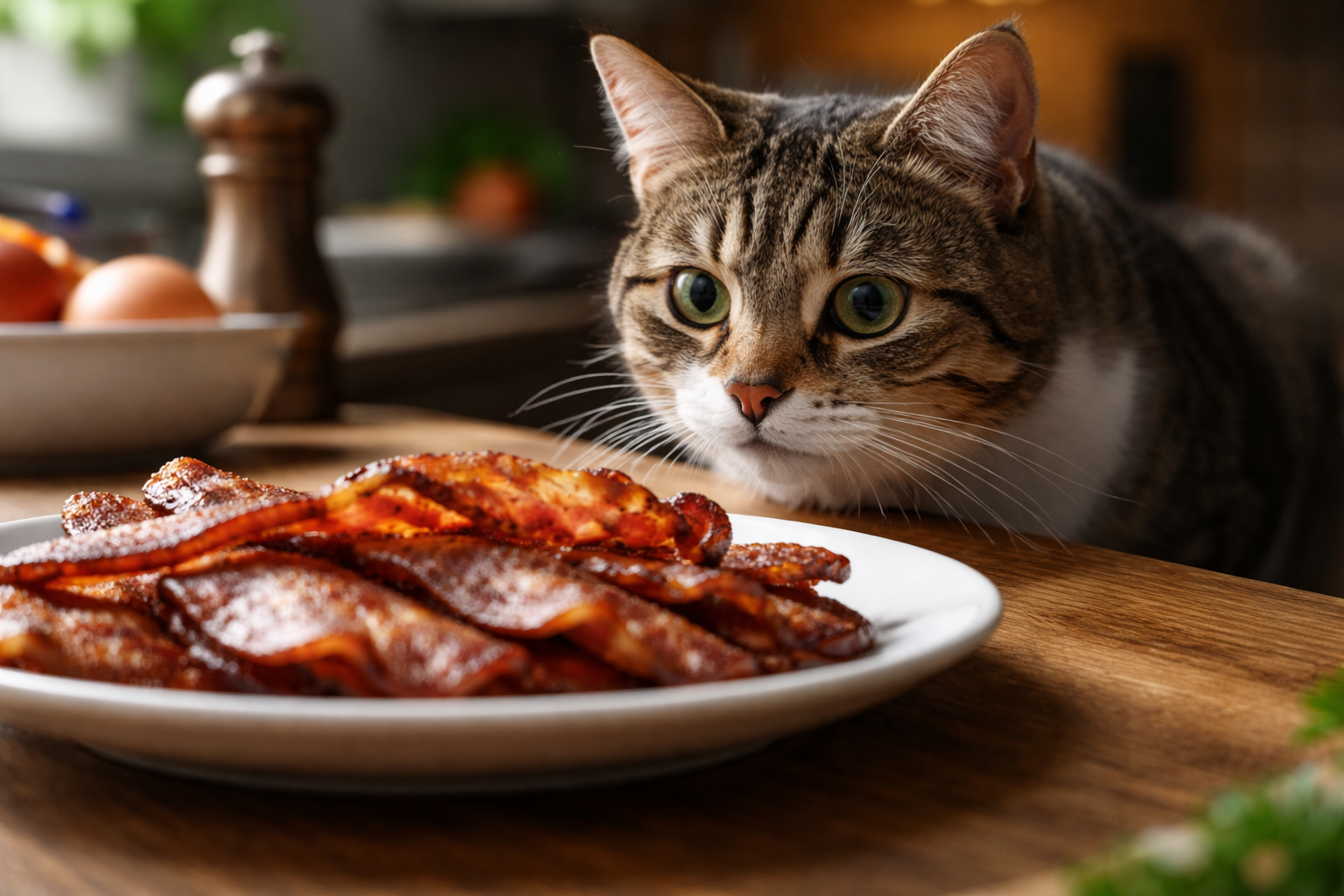
As a cat owner, you’ve probably experienced those pleading eyes staring at your breakfast plate while you enjoy crispy bacon. The question “can cats eat bacon?” is more common than you might think, with thousands of pet parents searching for answers every month. While cats are obligate carnivores and bacon is technically meat, the answer isn’t as straightforward as you might hope.
In this comprehensive guide, we’ll explore everything you need to know about cats and bacon—from the potential health risks to safer alternatives. Whether your cat has already stolen a piece or you’re considering sharing your breakfast, this article will give you the expert knowledge to make informed decisions about your feline’s diet.
Can Cats Eat Bacon? The Short Answer
No, cats should not eat bacon. While a tiny piece of cooked bacon won’t immediately poison your cat, bacon is far from a suitable food for felines and should never be a regular part of their diet. Bacon contains dangerously high levels of sodium, fat, and preservatives that can cause serious health problems in cats, ranging from digestive upset to life-threatening conditions like pancreatitis and sodium poisoning.
The risks significantly outweigh any minimal nutritional benefits, making bacon an inappropriate treat for cats of all ages and health conditions.
Understanding Your Cat’s Carnivorous Nature
Before diving into the specifics of bacon, it’s essential to understand what “obligate carnivore” truly means for your cat’s dietary needs.
What Does Obligate Carnivore Mean?
Cats are obligate carnivores, meaning they require meat to survive. Unlike dogs (facultative carnivores) or humans (omnivores), cats have evolved to derive all their nutritional needs from animal tissue. Their bodies are specifically designed to:
- Digest and utilize animal proteins efficiently
- Extract essential nutrients like taurine, arachidonic acid, and vitamin A from meat
- Process minimal carbohydrates
- Require high protein intake for energy and organ function
The Protein Paradox: Not All Meat Is Equal
While cats need meat, this doesn’t mean all meat products are beneficial. The key distinction lies in:
Natural prey vs. processed meats: Wild cats consume whole prey animals—mice, birds, and small mammals—which provide balanced nutrition including muscle meat, organs, bones, and small amounts of plant matter from their prey’s stomach contents.
Processed meats like bacon: These undergo curing, smoking, and preservation processes that add harmful ingredients never found in a cat’s natural diet, including excessive salt, nitrates, nitrites, sugar, and artificial flavorings.
What Cats Actually Need from Meat
Your cat’s ideal protein sources should provide:
- High biological value proteins: Easily digestible amino acids
- Taurine: An essential amino acid cats cannot produce themselves
- Arachidonic acid: A fatty acid necessary for skin health and reproduction
- Vitamin A: Cats cannot convert beta-carotene from plants into vitamin A
- Minimal additives: Natural, unprocessed meat without excessive sodium or preservatives
Bacon fails on almost every nutritional criterion that makes meat beneficial for cats.
Nutritional Breakdown: What’s Actually in Bacon
Understanding exactly what bacon contains will clarify why veterinarians and pet nutrition experts advise against feeding it to cats.
Typical Nutritional Content (Per 100g of Cooked Bacon)
| Nutrient | Amount | Cat’s Daily Requirement | Percentage |
|---|---|---|---|
| Calories | 541 kcal | ~200-250 kcal | 216-270% |
| Total Fat | 42g | ~5-7g | 600-840% |
| Saturated Fat | 14g | Minimal | Excessive |
| Sodium | 1,717mg | 42-84mg | 2,044-4,088% |
| Protein | 37g | 12-15g | 247-308% |
| Cholesterol | 110mg | Minimal needed | Excessive |
The Sodium Problem
The most alarming component of bacon is its sodium content. A single strip of bacon (approximately 8g) contains roughly 137mg of sodium—already exceeding the upper limit of what a 10-pound cat should consume in an entire day.
Cats have a much lower sodium tolerance than humans. While human adults can safely consume 2,300mg daily, cats should only consume 42-84mg depending on their size and activity level.
Hidden Ingredients in Bacon
Beyond the basic nutritional profile, bacon contains numerous additives:
Sodium nitrite and sodium nitrate: Preservatives that give bacon its pink color and extend shelf life. These compounds can form nitrosamines, which are potentially carcinogenic and particularly problematic for small animals with faster metabolisms.
Sugar and sweeteners: Many bacon varieties contain added sugars or maple flavoring, providing empty calories cats cannot properly metabolize.
Phosphates: Added to improve texture and retain moisture, but excessive phosphorus can strain feline kidneys.
Artificial smoke flavoring: Chemical compounds that may irritate sensitive feline digestive systems.
Why Bacon Is Dangerous for Cats: 7 Major Health Risks
Let’s examine the specific health hazards bacon poses to your feline companion.
1. Sodium Poisoning (Hypernatremia)
Excessive sodium intake can lead to hypernatremia, a dangerous condition where sodium levels in the blood become abnormally high.
Symptoms include:
- Extreme thirst and excessive urination
- Vomiting and diarrhea
- Lethargy and weakness
- Tremors and seizures
- Disorientation and loss of coordination
- In severe cases: coma or death
A cat weighing 10 pounds can experience sodium poisoning with as little as 0.5-1 gram of salt—easily obtained from just a few strips of bacon.
2. Pancreatitis
The high fat content in bacon can trigger pancreatitis, an inflammation of the pancreas that can be acute or chronic.
Why it happens: When cats consume excessive fat, their pancreas must produce extra enzymes to digest it. This overwork can cause the pancreas to become inflamed, and in severe cases, the digestive enzymes can begin attacking the pancreas itself.
Symptoms include:
- Loss of appetite (anorexia)
- Severe abdominal pain
- Vomiting (often severe and repeated)
- Diarrhea
- Dehydration
- Fever
- Lethargy and depression
Pancreatitis in cats can be life-threatening and often requires intensive veterinary care, including hospitalization, IV fluids, pain management, and anti-nausea medications.
3. Obesity and Weight Gain
Bacon is extraordinarily calorie-dense. A single strip contains roughly 43 calories—nearly 20% of an average cat’s daily caloric needs.
Long-term consequences of obesity in cats:
- Diabetes mellitus (cats are particularly prone to Type 2 diabetes)
- Arthritis and joint problems
- Hepatic lipidosis (fatty liver disease)
- Decreased lifespan
- Reduced quality of life and mobility
- Increased surgical and anesthetic risks
4. Cardiovascular Problems
The combination of high sodium, saturated fat, and cholesterol in bacon can contribute to cardiovascular issues.
Potential problems:
- Hypertension (high blood pressure)
- Increased risk of heart disease
- Arterial plaque buildup
- Strain on the cardiovascular system
While cardiovascular disease in cats often has other causes, dietary factors like excessive sodium and fat consumption can exacerbate existing conditions or increase risk.
5. Kidney Disease and Failure
Cats are already prone to kidney disease, especially as they age. The excessive sodium and protein load from bacon can accelerate kidney deterioration.
How bacon damages kidneys:
- High sodium forces kidneys to work harder filtering excess salt
- Creates electrolyte imbalances
- Increases blood pressure, damaging delicate kidney tissues
- Excessive protein from inappropriate sources stresses kidney function
Chronic kidney disease (CKD) affects an estimated 30-40% of cats over 10 years old. Feeding foods high in sodium and poor-quality protein can hasten progression.
6. Digestive Upset
Even in healthy cats, bacon can cause immediate gastrointestinal distress.
Common digestive reactions:
- Vomiting within hours of consumption
- Diarrhea or loose stools
- Gas and bloating
- Abdominal discomfort
- Loss of appetite for regular food
- Constipation (less common)
The high fat content, preservatives, and sodium all contribute to digestive irritation.
7. Parasites and Bacterial Infections (Undercooked Bacon)
If bacon isn’t thoroughly cooked, it may harbor dangerous pathogens:
Trichinella spiralis: A parasitic roundworm that causes trichinosis Toxoplasma gondii: While more common in other meats, it can be present in pork Salmonella: Bacteria that can cause severe gastrointestinal illness E. coli: Another bacterial pathogen found in undercooked meats
While cooking kills most pathogens, improperly handled or undercooked bacon poses infection risks.
What Happens If Your Cat Eats Bacon?
Despite your best efforts, cats are cunning creatures. If your feline friend has managed to sneak some bacon, here’s what you need to know.
Immediate Effects (First 24 Hours)
Small amount (one small piece): Most healthy adult cats who consume a tiny piece of bacon will likely experience minimal to no symptoms. You might notice:
- Increased thirst and water consumption
- Slightly more frequent urination
- Possible mild digestive upset
Moderate amount (1-2 full strips):
- Noticeable increased thirst
- Vomiting or diarrhea within 2-12 hours
- Lethargy or decreased activity
- Refusing regular meals
- Seeking cool places (due to feeling unwell)
Large amount (3+ strips or significant quantity):
- Risk of sodium poisoning symptoms
- Severe vomiting and diarrhea
- Excessive drooling
- Tremors or unusual behavior
- Requires immediate veterinary attention
Short-Term Effects (1-7 Days)
Even if initial symptoms seem mild, watch for:
- Continued digestive problems
- Changes in litter box habits
- Decreased appetite for regular food
- Weight gain from the calorie load
- Behavioral changes indicating discomfort
Long-Term Risks (With Repeated Exposure)
Regular bacon consumption, even in small amounts, can lead to:
- Gradual weight gain and obesity
- Development of pancreatitis
- Kidney damage accumulation
- Cardiovascular strain
- Nutritional imbalances from choosing bacon over balanced cat food
- Behavioral issues (begging, food aggression, refusing regular meals)
How Much Bacon Is Too Much for Cats?
The honest answer is that any amount of bacon is too much from a nutritional standpoint. However, understanding dosage helps assess risk levels.
Risk Assessment by Quantity
Tiny taste (pea-sized piece, <1g):
- Risk level: Very low for one-time exposure
- Likely outcome: No symptoms in most healthy cats
- Recommendation: Monitor for 24 hours; should not become a habit
Small piece (half a strip, 4-5g):
- Risk level: Low to moderate
- Likely outcome: Possible mild digestive upset, increased thirst
- Recommendation: Monitor closely for 48 hours; avoid future exposure
Full strip (8-10g):
- Risk level: Moderate to high
- Likely outcome: Digestive upset likely; sodium concerns for smaller cats
- Recommendation: Contact veterinarian for advice; monitor closely
Multiple strips (20g+):
- Risk level: High to severe
- Likely outcome: High probability of illness; risk of sodium poisoning
- Recommendation: Contact veterinarian immediately; may require examination
Size Matters: Weight-Based Considerations
The same amount of bacon affects cats differently based on their size:
Small cats (5-7 lbs):
- More susceptible to sodium poisoning
- Lower tolerance for excess fat
- One strip represents a larger percentage of daily caloric needs
Average cats (8-11 lbs):
- Standard risk calculations apply
- One strip = approximately 20% of daily calories
Large cats (12-15 lbs):
- Slightly higher tolerance but still at risk
- Often already overweight, making additional calories particularly problematic
The “No Safe Amount” Principle
Unlike some foods that are safe in moderation, bacon doesn’t have a “safe” threshold because:
- Even small amounts provide excessive sodium relative to feline needs
- The fat content is inappropriate regardless of quantity
- Preservatives accumulate with repeated exposure
- It creates unhealthy eating behaviors and expectations
Different Types of Bacon: Are Any Safe for Cats?
Pet owners often wonder if certain bacon varieties might be safer alternatives. Let’s examine the options.
Regular Pork Bacon
Standard supermarket bacon: The most common type, heavily processed with high sodium, nitrites, and fat. Verdict: Not safe for cats
Turkey Bacon
Often marketed as a “healthier” alternative for humans, turkey bacon is lower in fat than pork bacon but still problematic for cats.
Why it’s still unsafe:
- Still contains 500-700mg sodium per serving
- Highly processed with similar additives
- Contains artificial flavoring and preservatives
- Fat content, while lower, is still excessive for cats
Verdict: Not safe for cats despite being “leaner”
Canadian Bacon
Canadian bacon is actually lean back bacon or loin, not traditionally cured belly bacon.
Considerations:
- Lower in fat than regular bacon
- Still high in sodium (400-600mg per serving)
- Often contains added salt and preservatives
- More expensive with no benefit to justify the risk
Verdict: Marginally better than regular bacon but still not recommended
Uncured or “Nitrate-Free” Bacon
These products claim to be healthier by avoiding synthetic nitrites.
The reality:
- Often use celery powder or celery juice, which naturally contains nitrates that convert to nitrites
- Same or similar sodium content as regular bacon
- Still extremely high in fat
- “Natural” doesn’t mean safe for cats
Verdict: Not significantly safer for cats
Low-Sodium Bacon
Reduced-sodium varieties contain less salt than regular bacon but are still problematic.
Analysis:
- “Low sodium” for humans (400-600mg per serving) is still excessive for cats
- Remains very high in fat
- Still processed with preservatives
- Creates same unhealthy expectations
Verdict: Better than regular bacon but still not recommended
Raw Bacon
Some raw-diet advocates wonder about uncooked bacon.
Serious risks:
- All the problems of cooked bacon plus pathogen risks
- Trichinosis from Trichinella spiralis parasites
- Salmonella and E. coli contamination
- No nutritional advantage over cooked
- Even raw diets should use fresh, appropriate meats, not processed products
Verdict: More dangerous than cooked bacon; never feed to cats
Bacon Bits or Bacon-Flavored Products
Commercial bacon bits and bacon-flavored treats deserve special mention.
Real bacon bits:
- Concentrated sodium and fat
- Added preservatives for shelf stability
- Small size makes overconsumption easy
Imitation bacon bits:
- Typically plant-based with artificial flavoring
- High sodium from salt and soy products
- No nutritional value for obligate carnivores
- May contain onion or garlic powder (toxic to cats)
Verdict: Real bacon bits share all risks of regular bacon; imitation varieties may contain toxic ingredients
Symptoms to Watch For After Your Cat Eats Bacon
If your cat has consumed bacon, monitoring for concerning symptoms is crucial. Early detection can prevent serious complications.
Immediate Symptoms (0-6 Hours)
Gastrointestinal distress:
- Vomiting (single episode or repeated)
- Drooling or excessive salivation
- Lip licking or swallowing repeatedly
- Restlessness or pacing
- Seeking unusual places to hide
Behavioral changes:
- Excessive thirst
- Repeatedly visiting the water bowl
- Lethargy or unusual sleepiness
- Seeking cool surfaces (floor, bathtub)
Short-Term Symptoms (6-24 Hours)
Digestive issues:
- Diarrhea or loose stools
- Changes in stool color or consistency
- Straining in the litter box
- Decreased appetite for regular food
- Abdominal bloating or visible discomfort
Sodium-related symptoms:
- Excessive urination
- Continued excessive thirst
- Weakness or difficulty walking normally
- Disorientation or confusion
Serious Warning Signs (Requiring Immediate Veterinary Care)
Contact your veterinarian immediately if you observe:
Neurological symptoms:
- Tremors or shaking
- Seizures or convulsions
- Loss of coordination or stumbling
- Head pressing against walls or furniture
- Extreme lethargy or unresponsiveness
Severe gastrointestinal distress:
- Repeated vomiting (more than 2-3 episodes)
- Severe diarrhea, especially if bloody
- Visible abdominal pain (hunched posture, crying when touched)
- Complete loss of appetite for 24+ hours
Dehydration signs:
- Sunken eyes
- Dry or sticky gums
- Skin that doesn’t bounce back when gently pulled (tenting)
- Dark or reduced urine output
Cardiovascular concerns:
- Rapid or irregular heartbeat (you may feel this while petting)
- Pale or blue-tinged gums
- Difficulty breathing or rapid breathing
- Collapse or inability to stand
Delayed Symptoms (2-7 Days Later)
Pancreatitis indicators:
- Progressive loss of appetite
- Weight loss
- Continued or worsening lethargy
- Hunched posture indicating abdominal pain
- Yellowing of skin or eyes (jaundice) in severe cases
Kidney stress symptoms:
- Increased urination beyond initial 24 hours
- Changes in urine color or odor
- Decreased urination (indicating kidney shutdown)
- Swelling in limbs or face
Healthier Meat Alternatives to Bacon for Cats
If you want to share special meat treats with your cat, numerous safer options exist that align better with feline nutritional needs.
Best Meat Treats for Cats
1. Plain cooked chicken (breast or thigh):
- High-quality protein
- Low in fat when breast is used
- Minimal sodium when prepared without salt
- Easy to digest
- Preparation: Boil, bake, or poach without seasonings
2. Plain cooked turkey:
- Similar benefits to chicken
- Lean protein source
- Widely available
- Preparation: Cook thoroughly without salt, butter, or seasonings
3. Cooked fish (salmon, tuna, or whitefish):
- Rich in omega-3 fatty acids
- High palatability (most cats love fish)
- Good protein source
- Important notes: Feed in moderation (1-2 times weekly max); too much can cause thiamine deficiency and mercury concerns with tuna
4. Plain cooked beef:
- Rich in taurine and iron
- High protein content
- Preparation: Use lean cuts, thoroughly cooked, without salt or seasonings
5. Freeze-dried raw meat treats:
- Minimally processed
- Retains natural nutrients
- Convenient and shelf-stable
- Look for: Single-ingredient products from reputable pet food companies
Commercial Cat Treats Worth Considering
Protein-based freeze-dried treats:
- Brands like PureBites, Vital Essentials, or Stella & Chewy’s
- Made from pure meat without fillers
- Appropriate portion sizes for cats
Grain-free, meat-based soft treats:
- Look for treats with meat as the first ingredient
- Avoid products with excessive salt, sugar, or artificial additives
- Check that treats don’t exceed 10% of daily caloric intake
Preparation Guidelines for Homemade Meat Treats
When preparing meat treats for your cat:
- Never add seasonings: No salt, pepper, garlic, onion, or spices
- Cook thoroughly: Eliminate parasite and bacteria risks
- Remove bones: Cooked bones can splinter and cause choking or intestinal damage
- Cut into small pieces: Prevent choking; make treats last longer
- Store properly: Refrigerate cooked meat treats and use within 3-4 days
- Practice portion control: Treats should be no more than 10% of daily calories
Foods to Absolutely Avoid
While we’re discussing alternatives, be aware these foods are toxic or dangerous for cats:
- Onions and garlic: Cause hemolytic anemia
- Chocolate: Contains theobromine, toxic to cats
- Grapes and raisins: Kidney damage
- Alcohol: Extremely toxic, even in small amounts
- Xylitol: Artificial sweetener causing liver failure
- Raw dough: Expands in stomach; yeast produces alcohol
- Macadamia nuts: Toxic to cats
- Avocado: Contains persin, harmful to cats
What Veterinarians Say About Cats and Bacon
Veterinary consensus on bacon for cats is remarkably unified: it should be avoided.
Professional Veterinary Stance
The American Veterinary Medical Association (AVMA), American Animal Hospital Association (AAHA), and veterinary nutritionists consistently advise against feeding bacon to cats due to:
- Inappropriate sodium levels for feline physiology
- Excessive fat content leading to pancreatitis risk
- Lack of nutritional benefits
- Potential for creating poor eating habits
Dr. Jennifer Coates, veterinary advisor and contributor to PetMD, states that while a tiny amount of bacon won’t immediately poison a cat, the risks associated with regular consumption far outweigh any perceived benefits.
Veterinary Nutritionist Perspective
Board-certified veterinary nutritionists emphasize that cats require balanced nutrition from high-quality sources. Bacon fails multiple nutritional criteria:
Protein quality: While bacon is high in protein, it’s not a complete protein source with the appropriate amino acid profile for cats.
Fat composition: The saturated fat in bacon isn’t the type of fat cats need. Cats benefit more from omega-3 and omega-6 fatty acids found in fish and poultry.
Nutrient density: Bacon provides calories without essential nutrients like taurine in adequate amounts, making it “empty calories” for cats.
Emergency Veterinarians’ Experience
Emergency veterinary clinics regularly see cases related to inappropriate human food consumption, including bacon. Common presentations include:
- Acute pancreatitis following holiday meals where pets consumed fatty foods
- Sodium toxicity from processed meats
- Gastrointestinal foreign bodies (bacon packaging that smells like bacon)
- Obesity-related emergencies in pets regularly fed human food
The Consensus: Risk-Benefit Analysis
When veterinarians perform a risk-benefit analysis of bacon for cats:
Risks:
- Sodium poisoning
- Pancreatitis
- Obesity
- Kidney stress
- Digestive upset
- Behavioral problems
Benefits:
- None that can’t be obtained from safer alternatives
The overwhelming professional opinion: bacon provides no unique nutritional benefit that justifies its risks.
Special Considerations: Kittens, Senior Cats, and Health Conditions
Different life stages and health conditions affect how cats respond to inappropriate foods like bacon.
Kittens (0-12 Months)
Kittens are particularly vulnerable to bacon’s harmful effects:
Developmental concerns:
- Rapidly growing organs are more sensitive to toxins
- Smaller body mass means lower tolerance for sodium
- Nutritional imbalances can affect long-term development
- Establishing healthy eating habits is crucial during kitten-hood
Specific risks:
- Lower kidney reserve capacity
- Immature digestive systems less able to process high-fat foods
- Higher caloric needs mean bacon represents an even larger percentage of diet
- Learning to prefer bacon can create lifetime feeding challenges
Recommendation: Never feed bacon to kittens; focus on high-quality kitten food formulated for growth.
Senior Cats (11+ Years)
Older cats face compounded risks from bacon consumption:
Age-related vulnerabilities:
- Decreased kidney function (even in healthy seniors)
- Higher prevalence of chronic conditions (kidney disease, hyperthyroidism, diabetes)
- Reduced digestive efficiency
- Lower activity levels mean easier weight gain
- Compromised immune systems
Common senior cat conditions worsened by bacon:
Chronic kidney disease (CKD):
- Affects 30-40% of cats over age 10
- Excessive sodium accelerates kidney deterioration
- Protein quality matters more in CKD management
Hyperthyroidism:
- Common in senior cats
- High sodium can exacerbate cardiovascular symptoms
- Weight management becomes crucial
Diabetes mellitus:
- Obesity is a primary risk factor
- High-fat foods interfere with glucose regulation
- Bacon’s calorie density is particularly problematic
Recommendation: Senior cats should absolutely avoid bacon; focus on senior-specific diets addressing their health needs.
Cats with Pre-Existing Health Conditions
Heart disease:
- Sodium restriction is critical in managing heart conditions
- Even small amounts of bacon can worsen fluid retention
- Increased risk of congestive heart failure
Pancreatitis history:
- Cats who’ve had pancreatitis are at high risk for recurrence
- Even tiny amounts of high-fat food can trigger episodes
- Strict low-fat diet is essential
Inflammatory bowel disease (IBD):
- Processed meats can trigger flare-ups
- Preservatives and additives may worsen inflammation
- Controlled, limited-ingredient diets are typically recommended
Obesity:
- Calorie-dense foods like bacon sabotage weight loss efforts
- Creates behavioral expectations for inappropriate foods
- May trigger diabetes or worsen joint problems
Food allergies/sensitivities:
- Pork is a potential allergen for some cats
- Additives and preservatives may trigger reactions
- Symptoms include skin irritation, digestive upset, and ear infections
Pregnant or Nursing Cats
Special considerations:
- Nutritional demands increase significantly
- Inappropriate foods can affect developing kittens
- High-fat foods may interfere with lactation
- Focus should be on balanced, high-quality nutrition
Recommendation: Pregnant and nursing cats need specialized nutrition; bacon has no place in their diet.
Emergency Protocol: When to Call the Vet
Knowing when bacon consumption requires professional intervention can save your cat’s life.
Immediate Veterinary Attention Required
Contact your veterinarian or emergency clinic immediately if your cat experiences:
Severe symptoms:
- Seizures or convulsions
- Inability to stand or walk
- Collapse or loss of consciousness
- Severe difficulty breathing
- Continuous vomiting (3+ episodes within a few hours)
- Bloody vomit or diarrhea
- Signs of extreme pain (howling, aggression when touched, rigid posture)
Large quantity consumption:
- If your cat ate a large amount of bacon (3+ strips)
- If you’re unsure how much was consumed but suspect a large quantity
- If bacon was consumed along with other inappropriate foods
Monitor at Home (But Call Vet for Guidance)
For less severe situations, call your vet for advice while monitoring:
Moderate symptoms:
- Single episode of vomiting or diarrhea
- Mild lethargy
- Increased thirst and urination
- Mild digestive discomfort
Small quantity consumption:
- One small piece of bacon
- No immediate symptoms but you want professional guidance
- Previous health conditions that increase risk
What Information Your Vet Will Need
When calling your veterinarian, be prepared to provide:
- Cat’s details: Age, weight, breed, pre-existing health conditions
- Bacon details: Type, amount consumed, when it was eaten
- Symptoms: Specific behaviors or signs observed, timeline
- Medical history: Current medications, recent health issues
- Diet: What your cat normally eats
Home Monitoring Protocol
If your vet recommends monitoring at home:
First 24 hours:
- Check on your cat every 2-3 hours
- Provide fresh water; ensure they’re drinking
- Monitor litter box for urination frequency and stool quality
- Note any behavioral changes
- Withhold food for 4-6 hours if vomiting occurred, then offer small amounts
- Keep a log of symptoms, times, and severity
Days 2-7:
- Continue monitoring for delayed symptoms
- Watch for signs of pancreatitis or kidney stress
- Ensure return to normal eating, drinking, and litter box habits
- Contact vet if any new symptoms develop
What to Expect at the Veterinary Clinic
If your cat requires examination:
Diagnostic procedures may include:
- Physical examination
- Blood work (chemistry panel to check kidney function, electrolytes, pancreas enzymes)
- Urinalysis
- Blood pressure measurement
- Abdominal palpation or imaging if pancreatitis suspected
Treatment may involve:
- IV fluids for dehydration or electrolyte imbalances
- Anti-nausea medications
- Pain management
- Gastric protectants
- Hospitalization for severe cases
- Dietary management recommendations
Prevention is Key
The best emergency protocol is prevention:
- Store bacon securely where cats cannot access it
- Dispose of bacon grease properly
- Keep bacon packages out of reach
- Educate family members and guests about not feeding bacon to cats
- Consider providing appropriate treats so you’re not tempted to share
Frequently Asked Questions
Can cats eat bacon grease?
No, bacon grease is even more dangerous than bacon itself. It contains concentrated fat and sodium with no protein content. Bacon grease can cause severe pancreatitis, digestive upset, and contribute to obesity. Additionally, cats may experience vomiting and diarrhea from the high fat content. Never give bacon grease to cats, and properly dispose of it where curious cats cannot access it.
Is bacon safe for cats in small amounts?
While a tiny piece of bacon (pea-sized) is unlikely to cause immediate harm to a healthy adult cat, there is no “safe” amount from a nutritional standpoint. Even small quantities provide excessive sodium and fat without nutritional benefits. Regular consumption of small amounts can lead to accumulated health risks including weight gain, preference for inappropriate foods, and gradual organ stress. It’s best to avoid bacon entirely.
What should I do if my cat ate bacon?
First, assess the amount consumed and observe for symptoms. For small amounts (one small piece), monitor your cat for 24-48 hours for increased thirst, vomiting, or diarrhea. Ensure fresh water is available. For larger amounts (multiple strips), contact your veterinarian immediately for guidance. Watch for signs of sodium poisoning: excessive thirst, tremors, seizures, disorientation. When in doubt, always contact your vet, especially if your cat has pre-existing health conditions.
Can kittens eat bacon?
No, kittens should never eat bacon. Kittens are more vulnerable to bacon’s harmful effects due to their smaller size, developing organs, and lower tolerance for sodium and fat. Bacon provides no nutritional benefits for growing kittens and can interfere with proper development. Focus on high-quality kitten food formulated specifically for their growth needs. Establishing healthy eating habits during kitten-hood prevents future feeding challenges.
Are there any types of bacon safe for cats?
No type of bacon is truly safe for cats. Turkey bacon, Canadian bacon, uncured bacon, and low-sodium varieties all contain inappropriate levels of sodium and fat for feline consumption. Even “healthier” bacon alternatives are processed foods with additives unsuitable for cats. “Nitrate-free” versions often use celery powder which contains natural nitrates. Instead of any bacon variety, offer your cat plain cooked chicken, turkey, or fish as safer meat treats.
Can bacon cause pancreatitis in cats?
Yes, bacon can definitely cause pancreatitis in cats. The high fat content forces the pancreas to produce excessive digestive enzymes, which can lead to inflammation. Symptoms of pancreatitis include loss of appetite, severe vomiting, abdominal pain, lethargy, and fever. Pancreatitis can be acute (sudden onset) or chronic, and severe cases require hospitalization with IV fluids and pain management. Cats with a history of pancreatitis are particularly vulnerable to recurrence after consuming high-fat foods like bacon.
How much bacon is toxic to cats?
There’s no specific “toxic dose” of bacon because multiple factors determine risk: cat’s size, health status, and individual tolerance. However, sodium toxicity can occur with as little as 0.5-1 gram of salt—easily obtained from 3-4 strips of bacon for an average 10-pound cat. Risk increases with smaller cats and those with health conditions. Any amount provides inappropriate levels of sodium and fat, so it’s best to avoid bacon completely rather than trying to determine a “safe” amount.
Can bacon make my cat sick?
Yes, bacon can make your cat sick in multiple ways. Short-term effects include vomiting, diarrhea, excessive thirst, and lethargy within hours of consumption. Cats may refuse regular food and experience digestive discomfort. More serious reactions include sodium poisoning (with symptoms like tremors, seizures, and disorientation) and pancreatitis (severe abdominal pain, repeated vomiting). Long-term consumption contributes to obesity, kidney disease, and cardiovascular problems. Even cats who appear fine after eating bacon may experience internal stress.
What are safe meat alternatives to bacon for cats?
Safe meat alternatives include plain cooked chicken (breast or thigh), plain cooked turkey, cooked fish like salmon or whitefish (in moderation), plain cooked lean beef, and freeze-dried raw meat treats from pet food companies. When preparing these at home, cook thoroughly without any salt, seasonings, butter, or oil. Remove all bones and cut into small, bite-sized pieces. Commercial options include single-ingredient freeze-dried treats and high-quality, grain-free soft treats with meat as the first ingredient.
Can cats eat raw bacon?
No, cats should never eat raw bacon. Raw bacon poses all the same risks as cooked bacon (excessive sodium, fat, preservatives) plus additional dangers from pathogens. Raw pork can harbor Trichinella spiralis parasites causing trichinosis, as well as Salmonella and E. coli bacteria. Even advocates of raw diets for cats recommend fresh, unprocessed meats—not cured, processed products like bacon. Raw bacon provides no nutritional advantages and significantly increases health risks.
Will one piece of bacon hurt my cat?
One small piece of bacon is unlikely to cause serious harm to a healthy adult cat, though it may cause mild digestive upset, increased thirst, or temporary discomfort. However, smaller cats, kittens, senior cats, and those with health conditions (especially kidney disease, heart disease, or pancreatitis history) face higher risks even from tiny amounts. The bigger concern is establishing a pattern—cats who receive bacon once will often beg for it repeatedly, and regular consumption causes significant health problems.
Can cats have bacon as a rare treat?
Veterinarians and pet nutritionists recommend against using bacon as a treat, even rarely, because it provides no nutritional benefits and poses unnecessary health risks. Many safer alternatives exist that cats enjoy equally without the dangers of excessive sodium and fat. If you want to occasionally give your cat special treats, choose plain cooked chicken, freeze-dried meat treats, or high-quality commercial cat treats. These satisfy your cat’s desire for something special without compromising their health.
Final Verdict : The Bottom Line on Cats and Bacon
After examining the nutritional content, health risks, veterinary perspectives, and safer alternatives, the conclusion is clear and unambiguous: cats should not eat bacon.
Key Takeaways
Bacon is inappropriate for cats because:
- It contains 2,000-4,000% of a cat’s daily sodium requirement in a single strip
- The excessive fat content can trigger life-threatening pancreatitis
- Preservatives like nitrites and nitrates serve no nutritional purpose and may be harmful
- Regular consumption contributes to obesity, kidney disease, and cardiovascular problems
- No nutritional benefits justify the significant health risks
One small piece won’t immediately poison most healthy adult cats, but it provides no benefits and may cause digestive upset. More importantly, it establishes unhealthy expectations and eating patterns.
Special populations at highest risk:
- Kittens and senior cats
- Cats with kidney disease, heart disease, or pancreatitis history
- Overweight or diabetic cats
- Cats with food sensitivities or digestive conditions
Better Ways to Show Your Cat Love
Your cat doesn’t need bacon to know you love them. Instead:
Provide appropriate treats: Plain cooked chicken, high-quality freeze-dried meat treats, or commercial cat treats designed for feline nutrition.
Engage in play: Interactive play sessions with toys provide mental stimulation and physical exercise, showing your cat love in a language they truly understand.
Maintain proper nutrition: Feed a high-quality, balanced cat food appropriate for your cat’s life stage and health status.
Regular veterinary care: Preventive healthcare, including regular check-ups and dental care, demonstrates true commitment to your cat’s wellbeing.
Quality time: Grooming, petting, and simply being present with your cat builds your bond without compromising their health.
The Professional Consensus
Veterinarians, veterinary nutritionists, and animal health organizations universally recommend against feeding bacon to cats. This isn’t about being overly cautious—it’s about understanding feline physiology and respecting the very real health risks that bacon poses.
Your cat’s health and longevity depend on appropriate nutrition. While it might be tempting to share your breakfast, the few seconds of perceived enjoyment your cat gets from bacon isn’t worth the potential consequences.
Make the Right Choice
The next time you’re enjoying bacon and your cat gives you those pleading eyes, remember that saying “no” is actually an act of love. Protect your feline companion from unnecessary health risks by reserving treats for foods that support rather than undermine their wellbeing.
Your cat deserves the best nutrition you can provide—and that definitely doesn’t include bacon.
Have concerns about something your cat ate? Don’t wait. Contact your veterinarian for professional guidance. When it comes to your cat’s health, it’s always better to ask than to assume safety.